
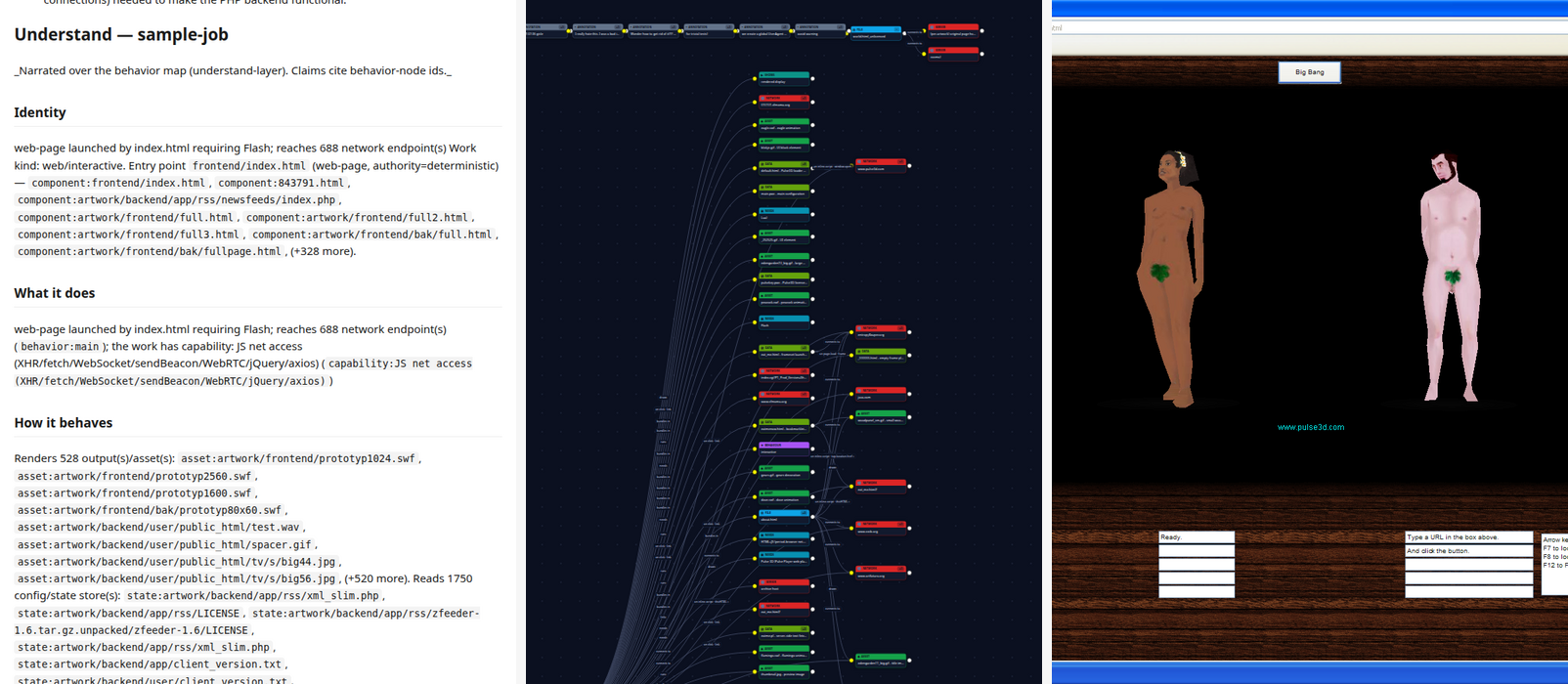
Analyse
artwork-autopsy · published alphaHand it an unknown bundle and it reads the work end to end: what it is, where it begins, what machine it needs, and every server it quietly calls.
For conservators triaging a work they’ve never seen run.
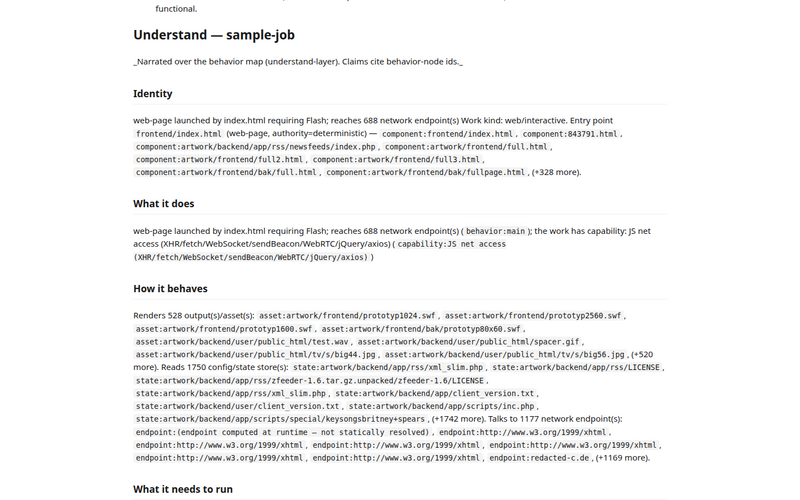
Revive
Research VM Controller · alphaBuild the era-correct machine in your browser, run the work, watch what it reaches for, try things and roll them back — then write the revival down as a shareable recipe.
For researchers and conservators doing the actual revival.
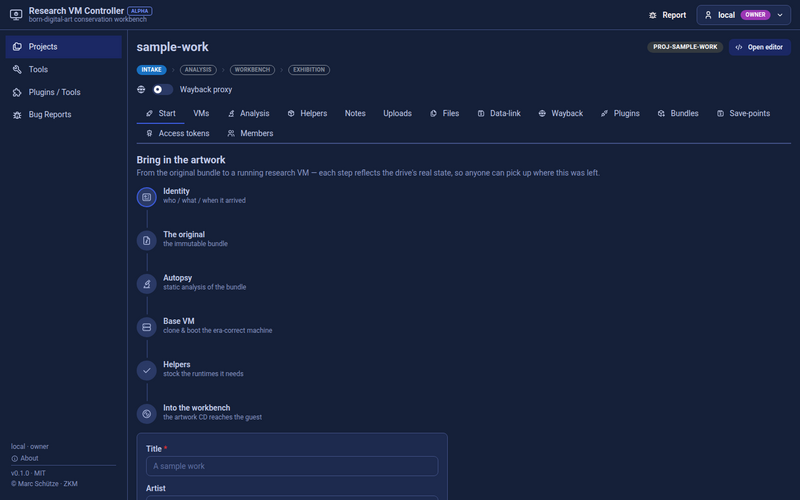
Exhibit
Exhibition VM Controller · publishedShow a work that’s understood: a virtual machine — a software copy of the work’s original computer — that runs unattended for the months a show is open and puts itself back into a known-good state within seconds of any crash.
For curators and gallery technicians keeping a show running.
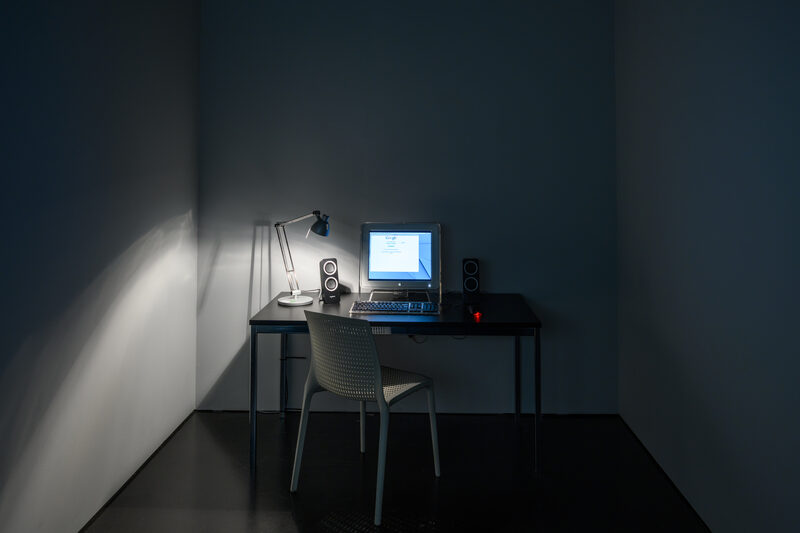
Open source, because a conservation record you can’t inspect is not a record
A museum that conserves cultural heritage with closed tools takes on a second preservation risk: the tool itself. If no one can see what an analysis did, what a revival changed, or how a machine was rebuilt, the conservation record ends where the vendor’s software begins — and dies with it. Every part of vmctl is MIT-licensed and public: the analysis, the workbench, the exhibition controller, and the recipes that carry a revival between them. Nothing proprietary stands between you and the artwork — reports are plain web pages, machines are standard virtual-machine files any emulator can open.